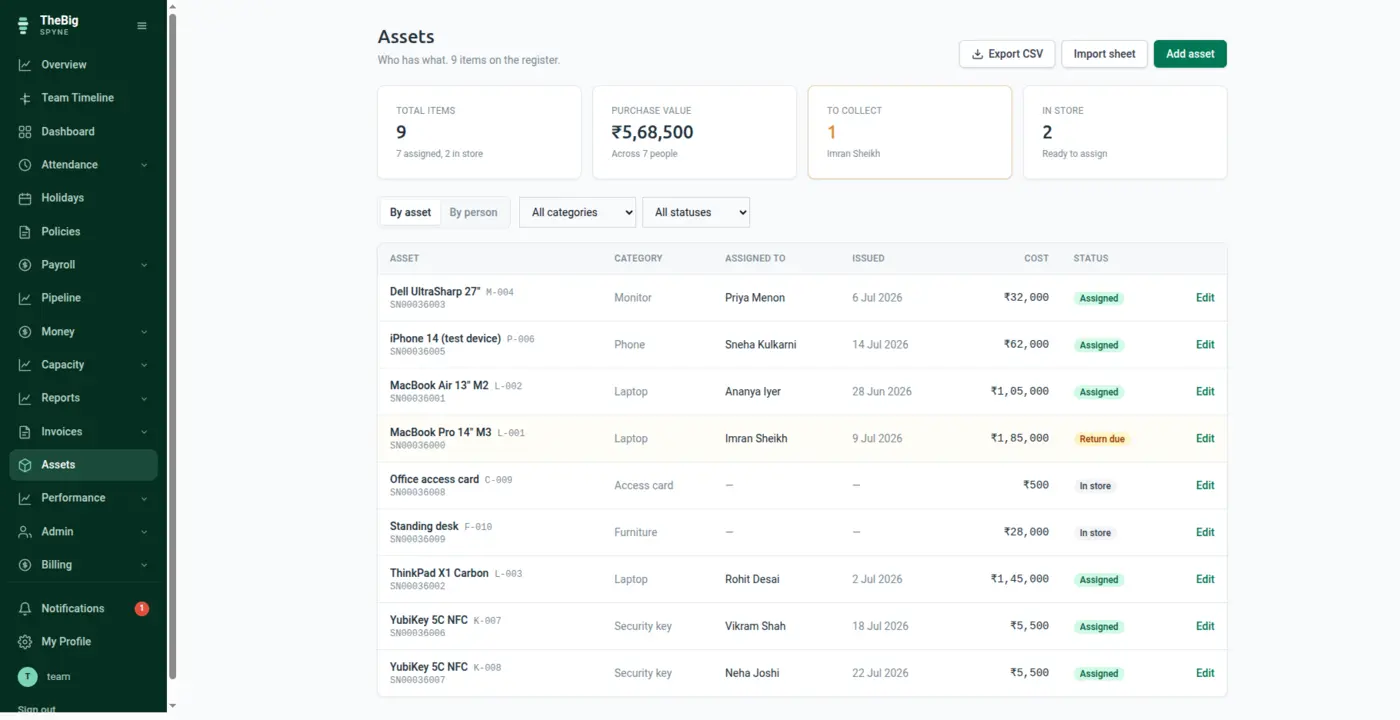
The reason equipment tracking belongs in your HR system rather than a spreadsheet is one moment: the last day. An unreturned laptop should hold up the final settlement, and it cannot do that from a different file.
30 days free · no card · your data exports whenever you want it
Equipment lists go stale within a quarter because updating them is nobody's job. The one time it matters — somebody leaving — the list is wrong, and the laptop is already gone.
Name, category, tag, serial number, cost and a photo. Import a spreadsheet if you already have one.
Assigning writes to an append-only custody ledger, so who held it in 2024 survives every reassignment since.
Anything held by somebody with an open exit shows as return due, and holds their settlement until it is logged back in.
Serial, tag, cost, condition, the photo taken when it was issued, and the full list of everybody who has held it.
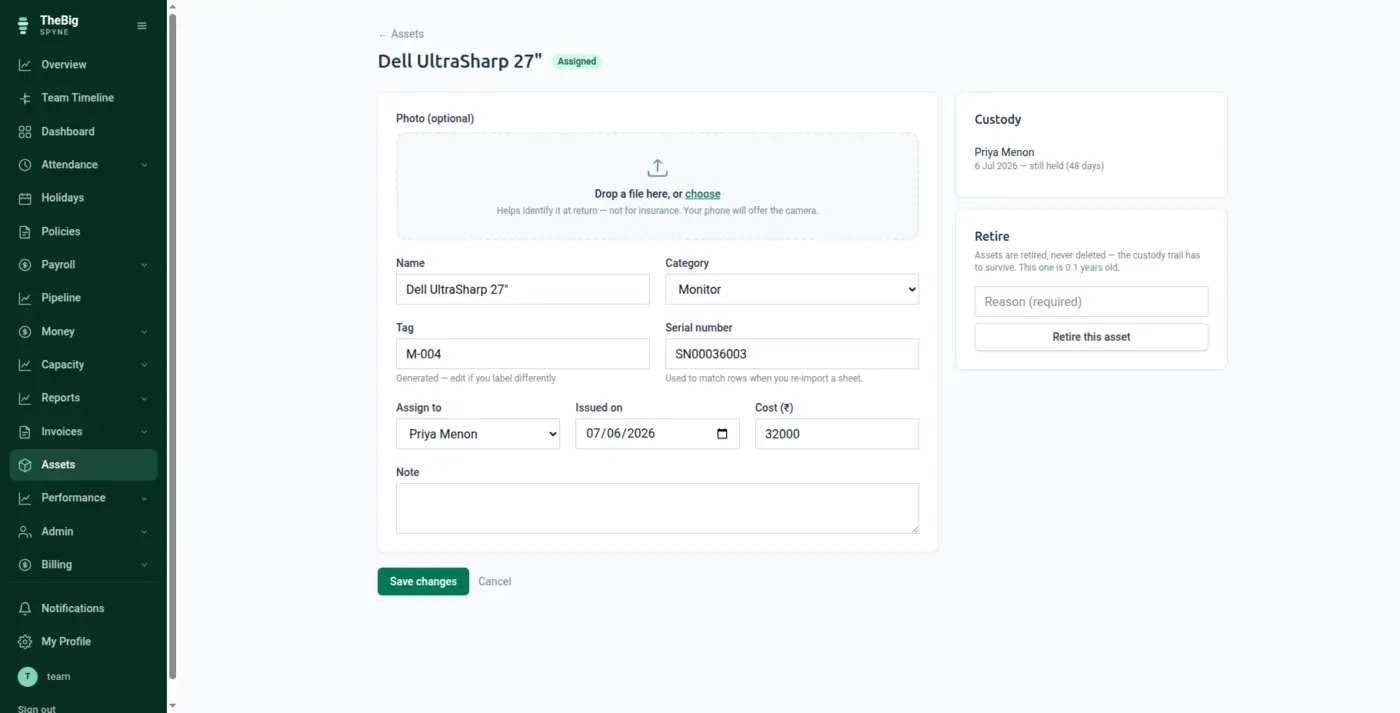
Every assignment and return is a ledger entry. "Who had this before?" is answerable years later, which a current-holder column can never do.
A returned security key matters more than a written-down monitor. The exit screen sorts accordingly.
An asset that dies is retired with a reason. Deleting it would take its custody history with it.
Purchase value across the register, and per person — useful the first time an insurer or an accountant asks.
| Categories | Laptop, monitor, phone, security key, access card, furniture, other |
|---|---|
| Custody | Append-only ledger of assignments and returns |
| Exit gate | Unreturned items block the final settlement |
| Import | CSV or Excel, deduplicated on serial number |
| Retirement | With a reason; assets are never deleted |
Because of the last day. An unreturned laptop should hold up a final settlement, and it can only do that if the register and payroll are the same system. Everything else about asset tracking a spreadsheet can do.
Yes — CSV or Excel, with a template to start from. The import previews what it will do before it writes anything, and deduplicates on serial number.
It is retired with a reason and stays on the register as a retired item. Deleting it would take its custody history — and the record of who had it when — along with it.
These are not separate products. What you record in one is what the next one reads.
Start a trial and generate a full sample company in one click — three months of attendance, payroll, invoices and projects, all joined up. Then delete it and start for real.