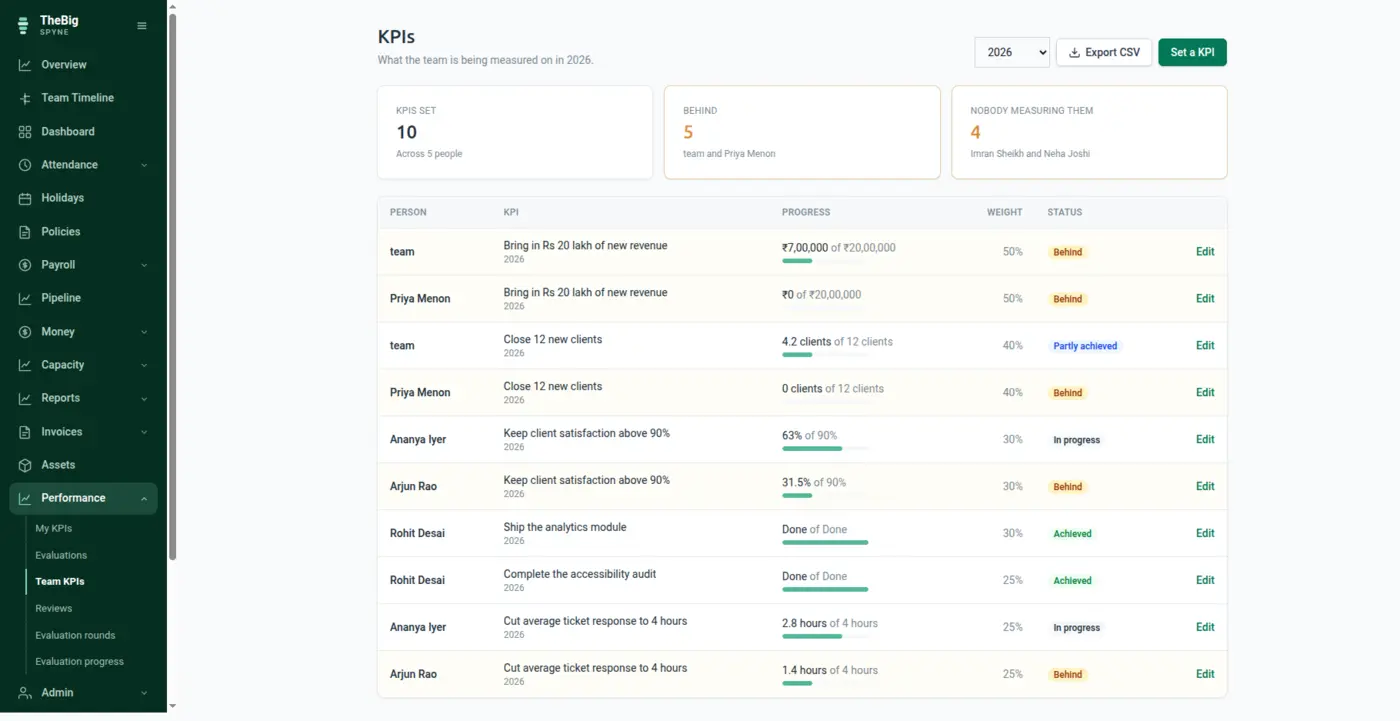
A target set in January and looked at in December is a guess dressed as a metric. Spyne keeps a running ledger of progress and lets people attach the actual work, so the review conversation starts from evidence.
30 days free · no card · your data exports whenever you want it
Annual reviews run on whatever both people happen to remember, which is usually the last six weeks. The work from March is not forgotten because it did not matter — it is forgotten because nobody wrote it down.
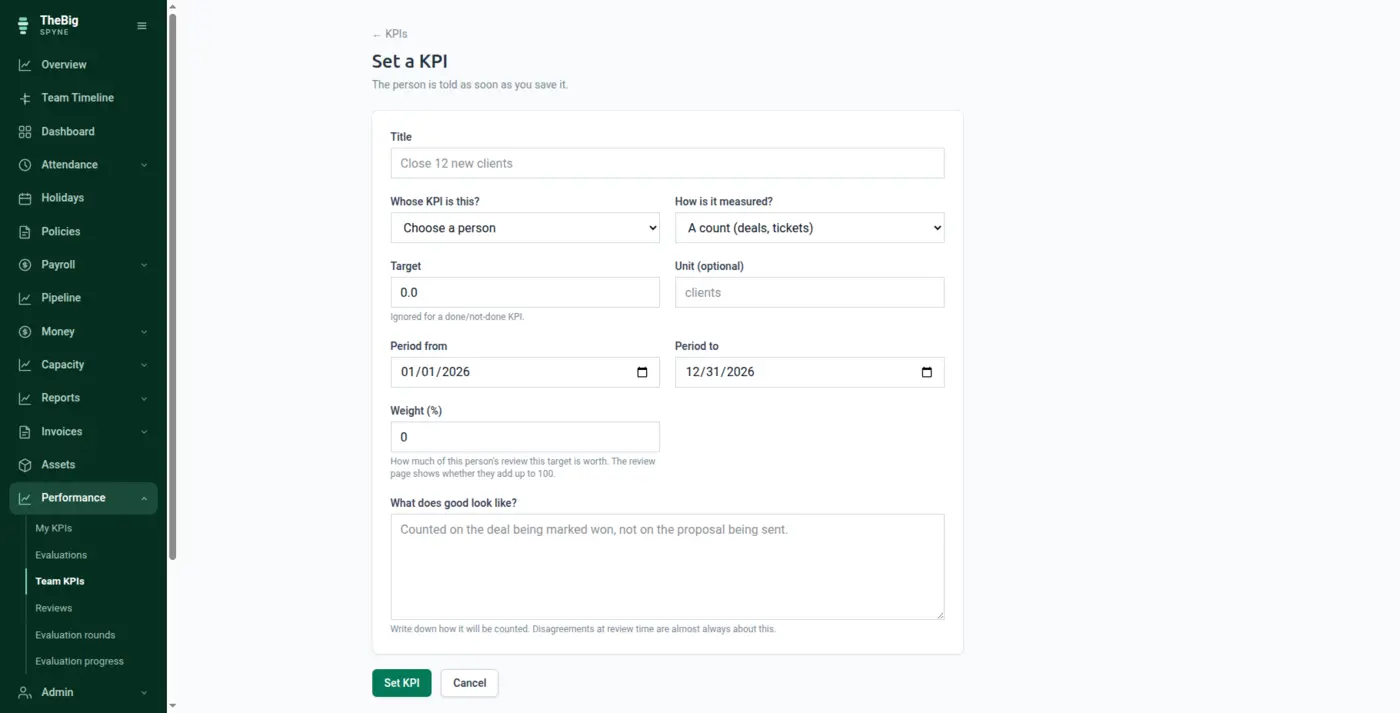
A count, a percentage, an amount of money or a milestone, with a weight and a period. Write down how it will be counted — that is what review-time disagreements are almost always about.
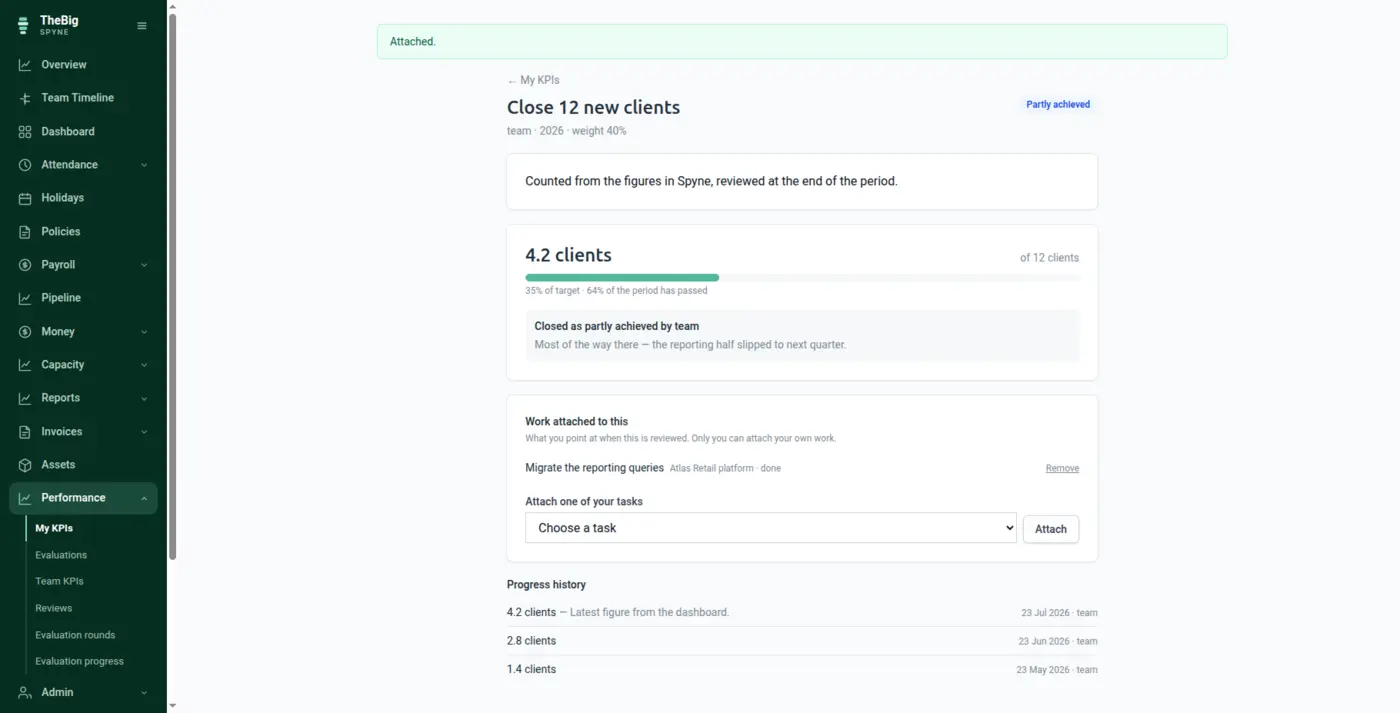
Each reading is appended, never overwritten, so the history shows the shape of the year. People attach the tasks behind the number.
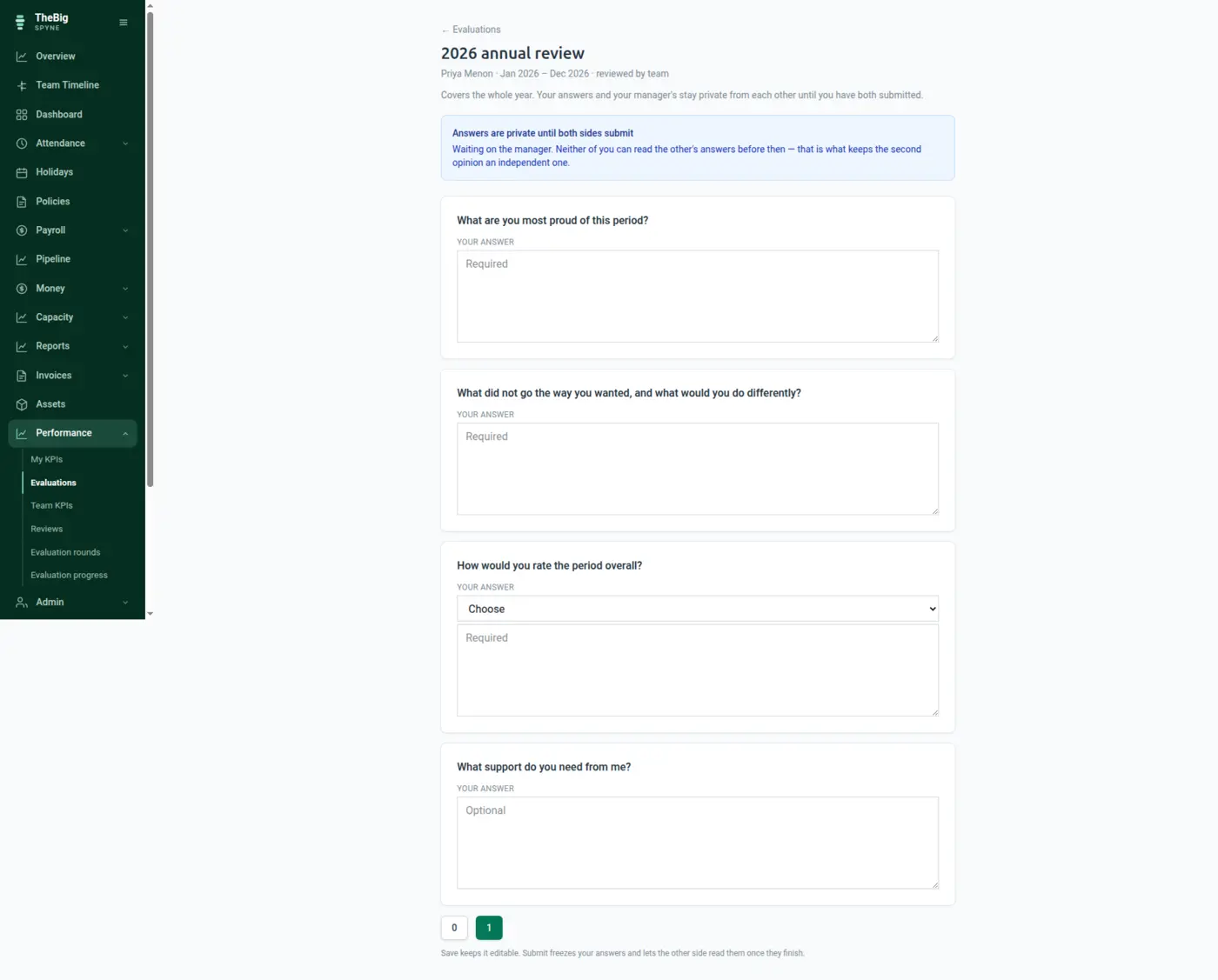
A weighted score, every target with its status, and the work attached to each — plus everything else they completed that nobody set a target for.
Weighted progress, every KPI with its outcome, the work attached as evidence and the other things they finished that nobody set a target for — which is often half of what somebody actually contributed.
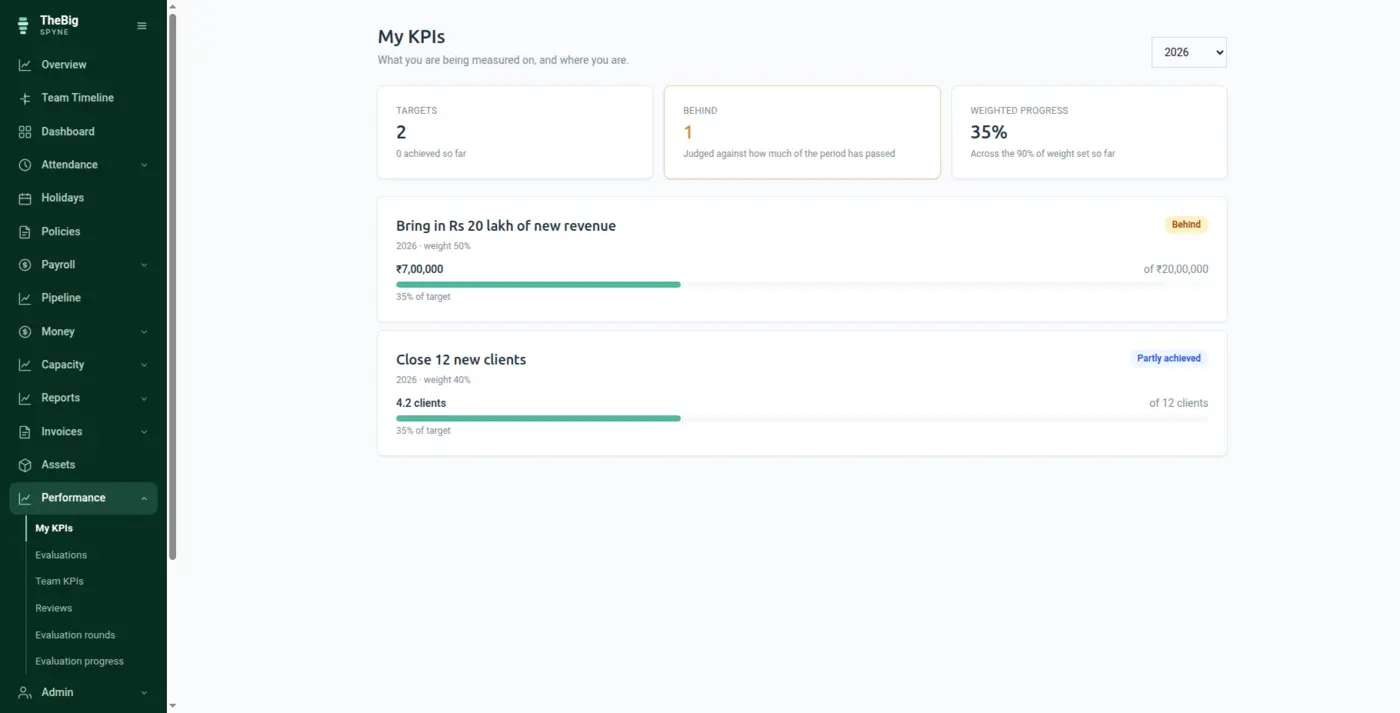
People can see exactly where they stand at any point in the year, record their own progress, and attach the tasks that back it up.
Readings are appended, so a correction is a new entry and both stay visible. There is no single mutable number for somebody to quietly move.
"On track" the day before the deadline is not information. Spyne compares progress against how much of the period has actually elapsed.
A target missed because the client cancelled is not a failure. Closing a KPI records a person's verdict — and if it disagrees with the arithmetic, it requires a written reason.
If only 60% of the weight has been assigned, the score says so rather than silently reporting the other 40% as failure.
| Measures | Count, percentage, currency amount, or done/not done |
|---|---|
| Progress | Append-only ledger of readings, never a stored counter |
| Evidence | Tasks attached by the person being measured |
| Outcomes | Achieved, partly achieved, missed, no longer applies |
| AI summary | Optional, opt-in per company, every claim verified against the data |
It turns the KPIs and completed work already on the page into five to ten factual points for the manager writing the review. It is never given the person's name, salary, attendance or leave, it is forbidden from rating or ranking anybody, and every KPI it mentions is checked back against the database — one wrong claim discards the whole summary.
Yes. AI is off until you switch it on, and every screen works fully without it. The summary is a drafting aid, not the review.
The person themselves, always. Anybody else needs the permission to see the team's KPIs, and setting or closing them needs a separate one again.
The target and weight can be edited; the progress readings cannot, and the KPI cannot be moved to a different person — that would carry somebody else's history with it.
These are not separate products. What you record in one is what the next one reads.
Start a trial and generate a full sample company in one click — three months of attendance, payroll, invoices and projects, all joined up. Then delete it and start for real.