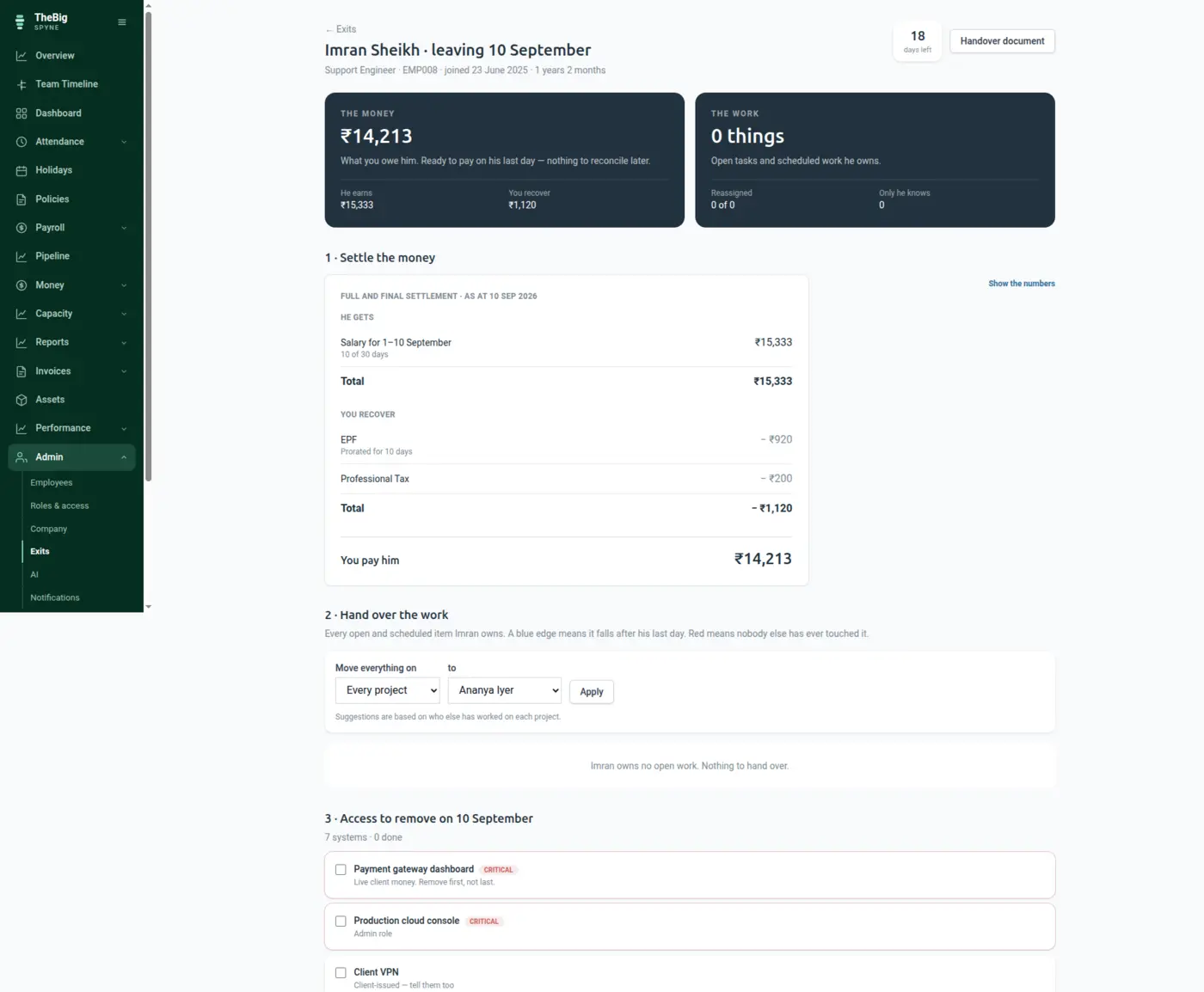
An exit is half a dozen things that all have to happen, owned by different people, usually tracked in somebody's head. Spyne makes it one checklist with a gate at the end — the settlement will not release while something is outstanding.
30 days free · no card · your data exports whenever you want it
The unreturned laptop is discovered a month after the final payment has gone out. The shared mailbox nobody reassigned is discovered when a client emails it. Both are the same failure: a checklist that lived in a head.
Resignation date, last working day, notice required and whether shortfall is recovered. Spyne works out the notice served and what it means for the settlement.
Their open tasks are listed with the ones only they know flagged. Assign each to a successor and record when it actually happened.
Assets outstanding and access still live both hold the settlement. When they clear, the final figure is computed from real payroll.
Spyne reads their open work and asks the question that matters: is there anybody else who could pick this up? The answers become the handover plan.
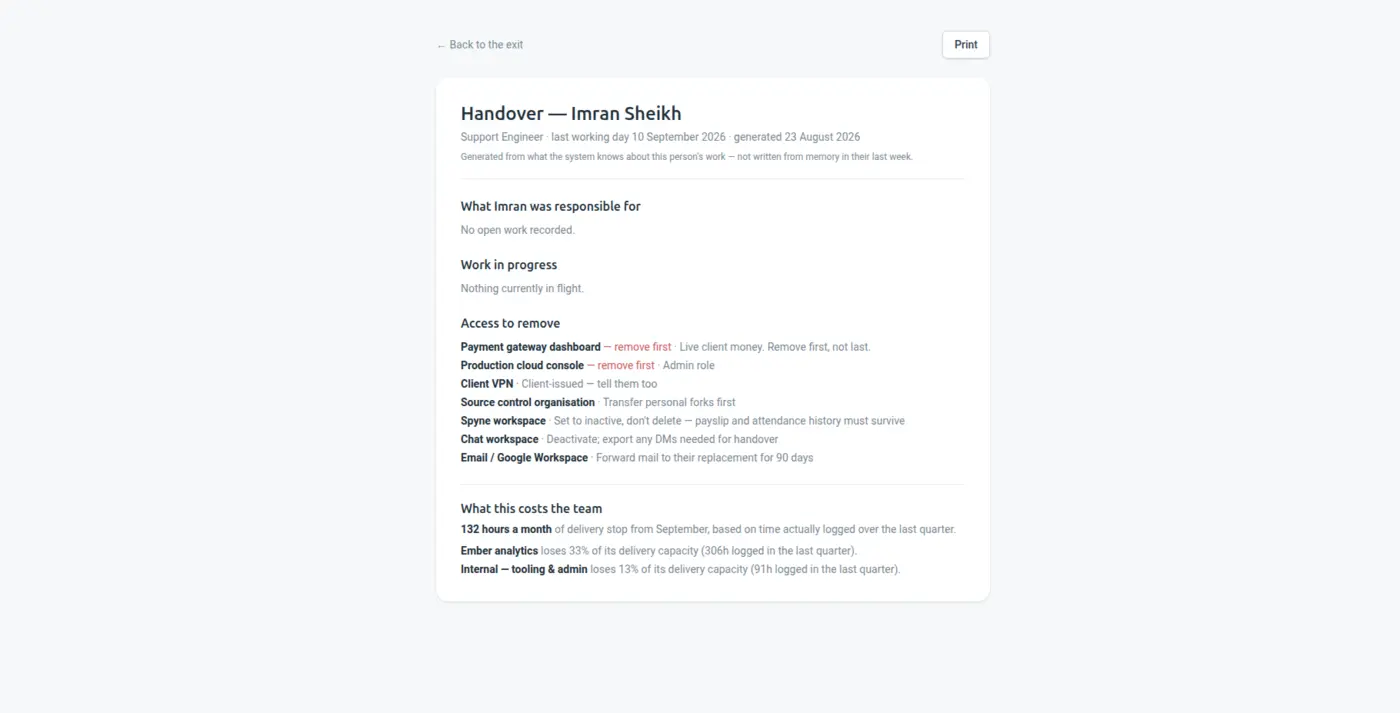
The settlement is blocked while a laptop is out or an account is still live. The last day is the only moment there is real leverage, and this is what uses it.
Tasks only the leaver understands are ranked first, so the handover conversation starts with the thing that would actually hurt to lose.
Every system the person had access to, ticked off one at a time, with who confirmed it. Credentials rank above equipment — a returned key card matters more than a written-down monitor.
Notice shortfall, leave encashment and the final month's pay come from payroll and the leave ledger, not from a separate calculation somebody does in a spreadsheet.
| Reasons | Resignation, end of contract, termination, retirement |
|---|---|
| Settlement gate | Blocked by outstanding assets or live access |
| Notice | Required vs served, with optional recovery of shortfall |
| Handover | Per task, with a named successor and a date |
The gate is deliberate, and it tells you exactly what is outstanding. Anything genuinely written off is recorded as such against the asset, so the settlement releases with a reason attached rather than by overriding the check.
From the same records as normal payroll: the final month prorated on real attendance, leave encashment from the ledger, and any notice shortfall you have chosen to recover. It is a payslip, not a separate spreadsheet.
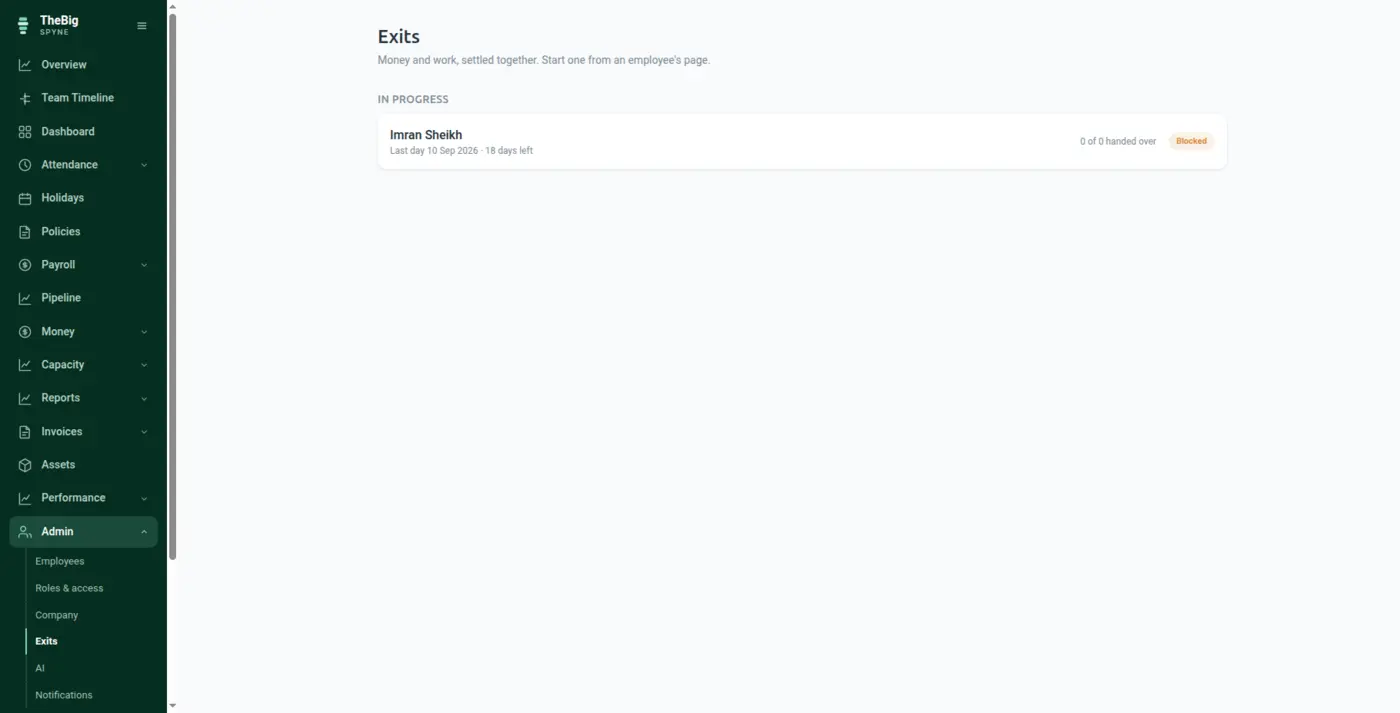
They are listed on the handover screen with the ones only they know flagged first. Each is assigned to a successor and marked handed over with a date, so the exit cannot quietly complete around them.
These are not separate products. What you record in one is what the next one reads.
Start a trial and generate a full sample company in one click — three months of attendance, payroll, invoices and projects, all joined up. Then delete it and start for real.