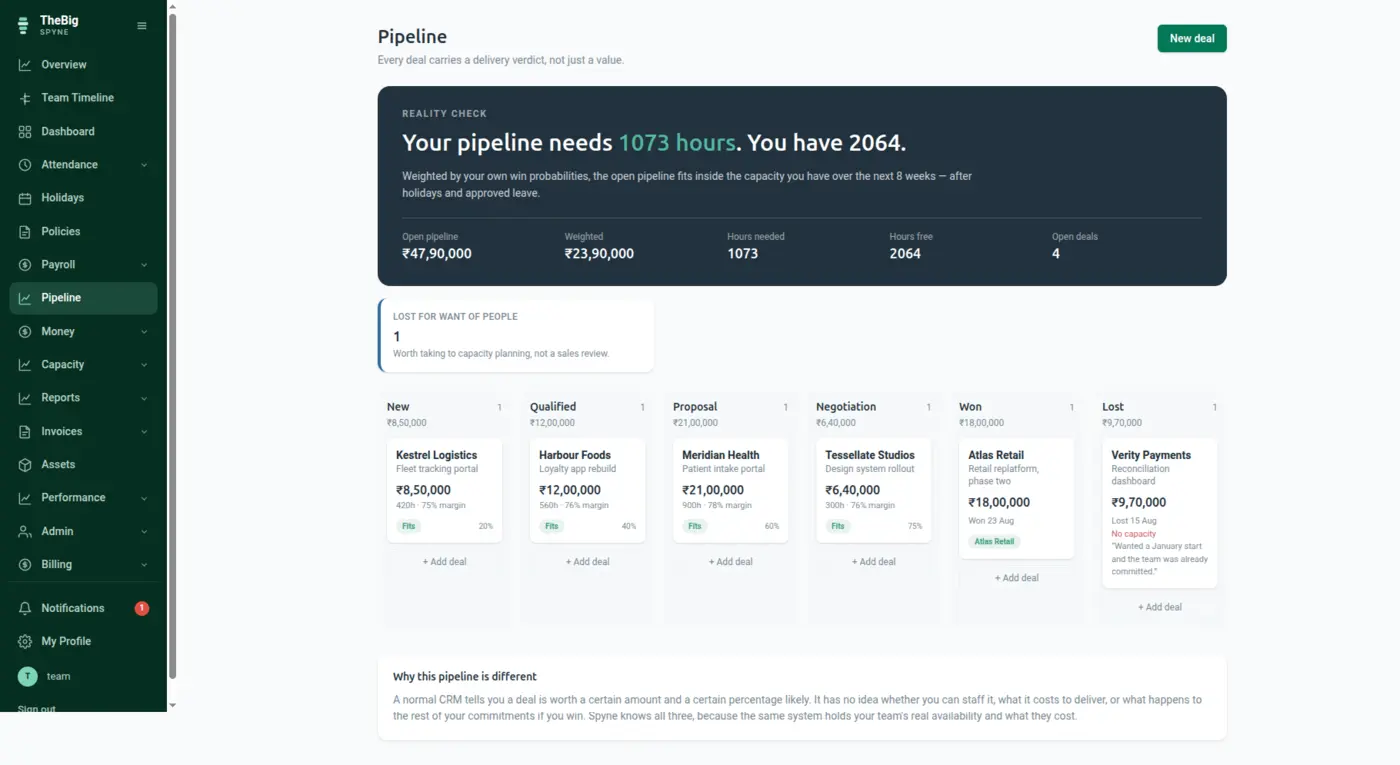
Most CRMs will happily let you win work you cannot staff. Spyne checks the deal against the team's real availability and the real cost of the hours, then turns the won one into a project with the capacity already reserved.
30 days free · no card · your data exports whenever you want it
The gap between sales and delivery is where small agencies lose money. The deal is priced on a guess, accepted on optimism, and delivered by people who were already full.
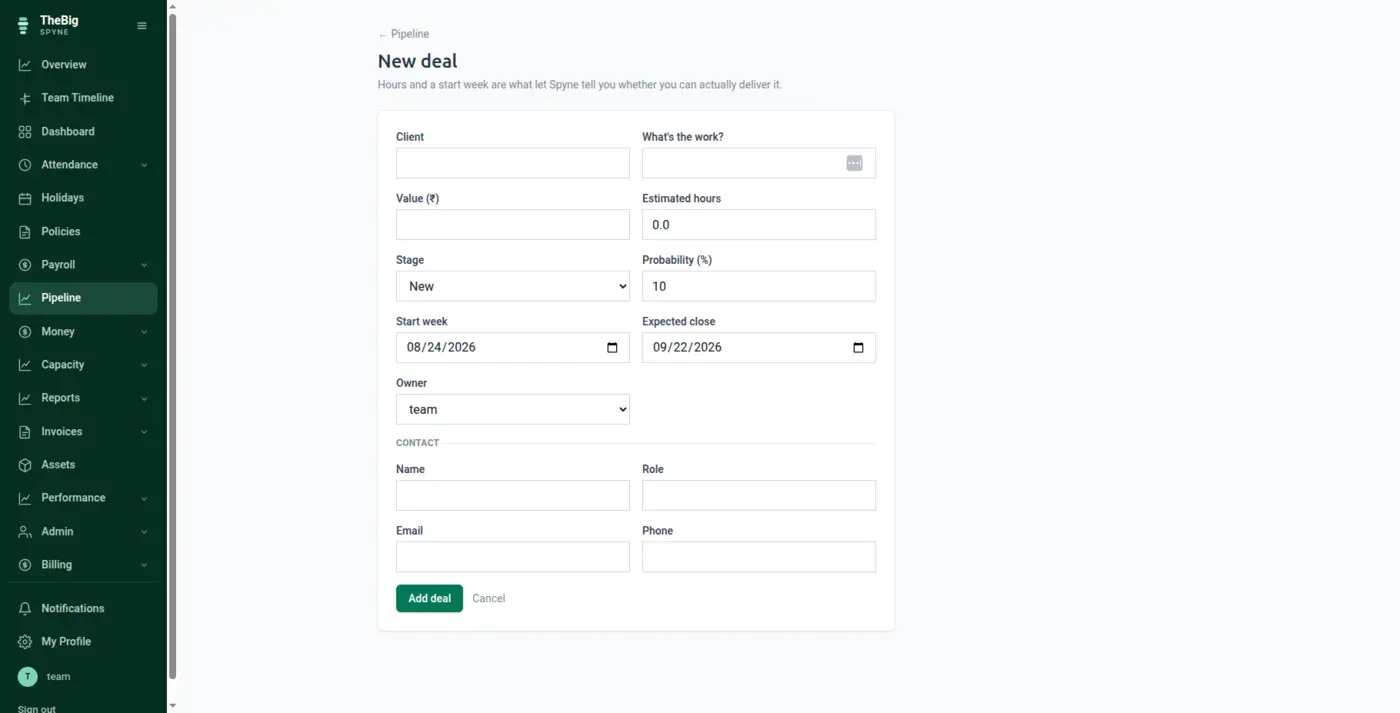
Client, value, estimated hours, probability and expected close. Stages from first lead to negotiation, with the contact on the record.
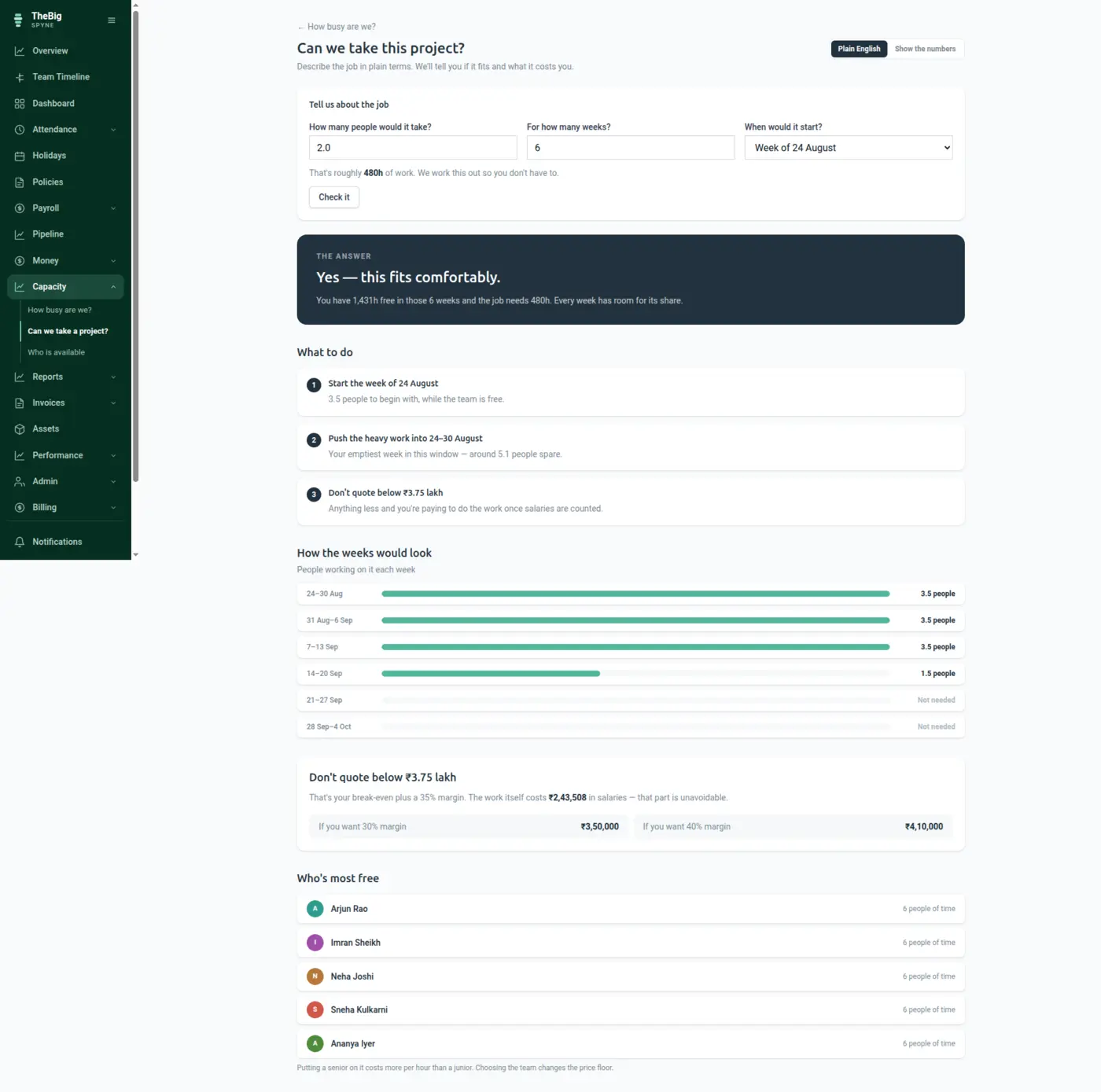
Before committing: the hours the team actually has free in that window, and what those hours cost in salary — the floor below which the project loses money.
Winning creates the project, reserves the hours against the team and records the expected income — in one transaction.
Enter the hours and the window. Spyne answers with what the team genuinely has free after leave, holidays and existing commitments — and what those hours cost.
Each deal carries whether the team can deliver it in the window promised, computed from the same capacity forecast the delivery side uses.
"We couldn't staff it" is a capacity problem, not a sales problem. Recording it as one is what lets you see the pattern.
No re-keying a deal into a project. Winning creates the project, assigns the team and holds their hours so the next quote does not promise the same time again.
Pipeline value weighted by probability, so the figure on the dashboard is one you can plan against.
| Stages | New lead, qualified, proposal, negotiation, won, lost |
|---|---|
| Lost reasons | Price, timeline, no capacity, competitor, went quiet, other |
| On winning | Creates the project, reserves capacity, records expected income |
| Weighted value | Deal value multiplied by probability |
Deliberately not. It is deals, stages, contacts, activity and the two verdicts that matter for a services business — can we deliver it, and what does it cost. If you need marketing automation and lead scoring, this is not that.
One step creates the project, assigns the people you choose, reserves their hours so the next quote cannot promise the same time, and records the expected income against the P&L.
The reserved hours expire and return to the pool automatically. Otherwise the team looks full because of work that never happened.
These are not separate products. What you record in one is what the next one reads.
Start a trial and generate a full sample company in one click — three months of attendance, payroll, invoices and projects, all joined up. Then delete it and start for real.